It’s Spaghetti on the Wall Productions, “a podcast production...



It’s Spaghetti on the Wall Productions, “a podcast production...
"“A book that manages to meld Hobbes, James Bond, science fiction, and...
Testimony Before the House Committee on Armed Services Thank you Chairman...

Do we care so much about whether and how the government accesses our data...

Coauthored with Wells C. Bennett How much does the relationship between...

Coauthored with Daniel Byman, Foreign Affairs, May-June 2014 The long-running...
Testimony before the House Foreign Affairs Subcommittee on Terrorism,...

Coauthored with Kenneth Anderson OVERVIEW Over the course of President...
Welcome to my personal web site. I am a senior fellow in Governance Studies at The Brookings Institution. I am co-founder and editor in chief of Lawfare, which is devoted to non-ideological discussion of “Hard National Security Choices,” and I am a member of the Hoover Institution’s Task Force on National Security and Law.
This site is a collection of much of my recent work—both my written work and my speeches, panel appearances, and interviews. It is not comprehensive retrospectively, though I shall endeavor to make it so prospectively. I have left out some material—most notably all Washington Post editorials I wrote on behalf of the editorial page when I worked at the Post. In addition, other than carrying an RSS feed from Lawfare, it will not replicate Lawfare‘s content. Its purpose is to bring together in one place my other work and to integrate my speaking and my written work on a single site. Enjoy.
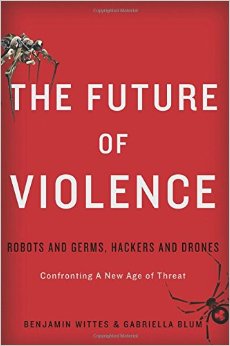
I have a new book out, The Future of Violence: Robots and Germs, Hackers and Drones—Confronting A New Age of Threat
I am also the coauthor, with Kenneth Anderson, of the forthcoming serialized book, Speaking the Law: The Obama Administration’s Addresses on National Security Law
I am also the author or editor of:


With my partners, Shane Harris and Jennifer Howell, I am the creator of the experimental podcast company, Spaghetti on the Wall Productions.
In my spare time, I practice taekwondo and aikido and I enjoy building things with wood.
 The Lawfare Podcast
 Benjamin Wittes